Plate “Chumbera” inspired by the painting “El Encierro” by Joaquín Sorolla, Andalusia, 1914.
This work describes a typical Andalusian scene, in which cattle path is appreciated; mules, cows and horses through a rural road, landscape of pitas and prickly pears.
READ MORE
Those two elements are going to be the protagonists of the tableware design for this painting where Jorge de Andrés presents a very special prickly pear ice cream.
Plate “La Pesca del Atún” inspired by the painting “La Pesca del Atún ” by Joaquín Sorolla, Ayamonte, 1919.
The scene that Sorolla captures occurs at the foot of the water. The design of this plate wants to speak of it, of its movement; and also of the awnings, their shape and the beige-yellow reflections that spread through all the elements that Sorolla recreates.
READ MORE
Here Jorge de Andrés presents Almadraba´s Tuna covered in almonds.
Plate “Nazarenos” inspired by the painting “Los Nazarenos” Joaquín Sorolla, 1914.
For the design of the tableware inspired by Sorolla´s painting, I extract two key concepts: The Cross and the conical headwear.
READ MORE
In the set design, the cross is represented by the solid wood in a disk shape that rises together with the ceramic cone as a Conical headwear-cover where Jorge de Andrés delights us with a vigil potage.
Plate “Farolillo” inspired by the painting “El Baile” by Joaquín Sorolla, Seville, 1915.
In this painting Sorolla gets inside a typical Andalusian patio to observe some Sevillanas.
READ MORE
The decoration of the space with flowers and lanterns is what will give us the plate’s shape, which we extract from this painting. Talking about color, we look at the white of the walls, the shawls in motion and the Sevillian dancers’ costumes.
The dance movement is also represented on the plate with the opening and closing of the Lantern with its folds, discovering inside a wonderful pestiño that Jorge de Andrés makes.
Plate “Saco” inspired by the painting “La Fiesta del Pan” by Joaquín Sorolla, Castilla, 1913.
The painting represents a wheat market in which an imaginary “Fiesta del Pan” is held, under Ávila walls.
READ MORE
For the design of the plate, the sacks of wheat that abound in all parts of the painting are chosen. The ceramics are textured with the sackcloth, where the chef Jorge de Andrés presents caramelized torrijas with a sheep’s milk ice cream and sweet wine, Mediterranean diet trilogy: wheat, oil and wine.
“One of the most dangerous environmental problems is the contamination of the air that we breath”
Five sculptures for the new capsule collection of sneakers No.22. A sneakers collection to help reduce negative environmental impacts.
READ MORE
“No.22 is a unisex sneaker covered with a transparent film of titanium dioxide (TiO2) that, with the incidence of UVA rays, eliminates up to 80% of the NOX that comes in contact with the surface of the shoe”
The five ceramic sculptures invite us to travel with the air in its purest and most natural way. Through different shapes, lights and air movement, the sculptures freeze several moments throughout the chemical process that takes place on the surface of the shoes.
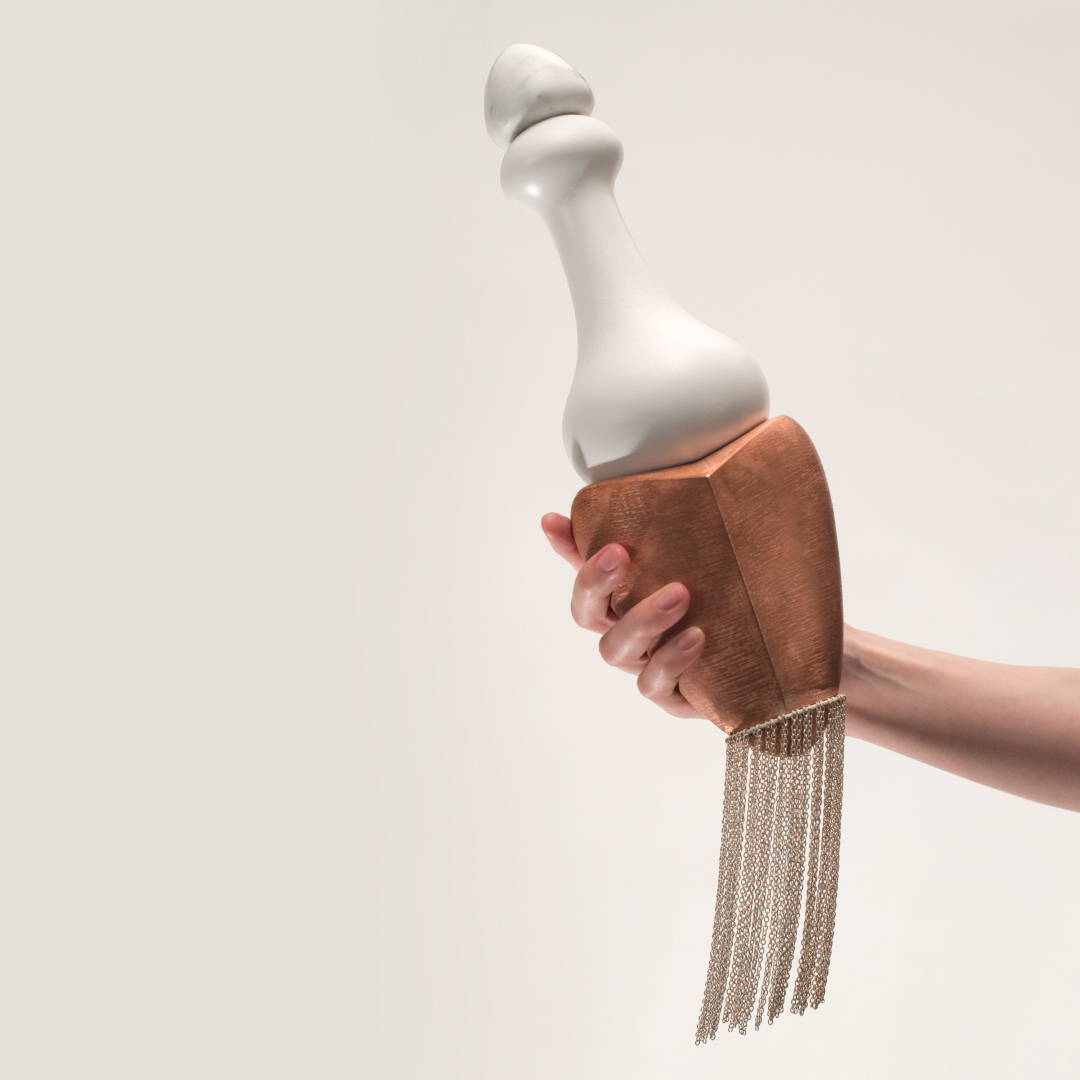
MIMAME is a three art pieces’ collection for the sensory pleasure. The pieces are designed to activate different sensations in our body, combining distinct materials and textures which are connected so that we could enjoy a unique experience.
READ MORE
We belong to this multi-sensory world in which our perspective changes constantly. Our actions and thoughts are influenced all the time by what we receive from our environment; what we touch, what we see, in short, by what we feel.
The pieces´ visual strength, the sensuality of their shapes, or even the own weight of the materials, together with the gentleness of the feathers, the cold of the metal and the glass´ or marble´s perfection, allow us to experiment a moment of sensory pleasure, which generates a direct link with them.
MIMAME invites us to experience the reality of the senses, creating a feeling that goes beyond the impact that it produces. They caress our glance.
A trip across the surprise, the emotion, the desire, the excitement, the relaxation, the balance or the curiosity.
—
MIMAME was part of “Sybaris”, an exhibition of the Helsinki Design Week in 2015. In addition to the creation of the sculptures, Laura Maldonado was in charge of the curatorial project and the spatial design of the exhibition. MIMAME and Sybaris have been published in Wallpaper*, Disegno Daily, TL magazine, Arts Thread y New Nordic design.
botijÓN is a reinterpretation of the traditional Spanish botijo. Its ergonomic design is a fusion between the traditional tableware of the Spanish culture and the avant-garde simplicity of the northern European design.
READ MORE
Porous porcelain earthenware jug which is not only re-usable, but also keeps water cool by taking advantage of natural energy sources. This is a process called “evaporative cooling”, whereby the inside water that is filtered to the outside through pores in the earthenware uses its own thermal energy to evaporate.
The traditional botijo is redesigned as it can offer to everybody, and mostly the ones who live in warmer countries, the possibility to drink cold water, turning this heat into a refreshing effect while drinking water in a more comfortable temperature.
Moreover nowadays, which is one of the moments of the history where the biosphere´s climate changes faster, botijÓN can be a good tool to save energy from refrigeration.
A different and sustainable way to drink.
—
botijÓN was part of the world EXPO in Milan and was exhibited at the Helsinki Design Museum in 2015.
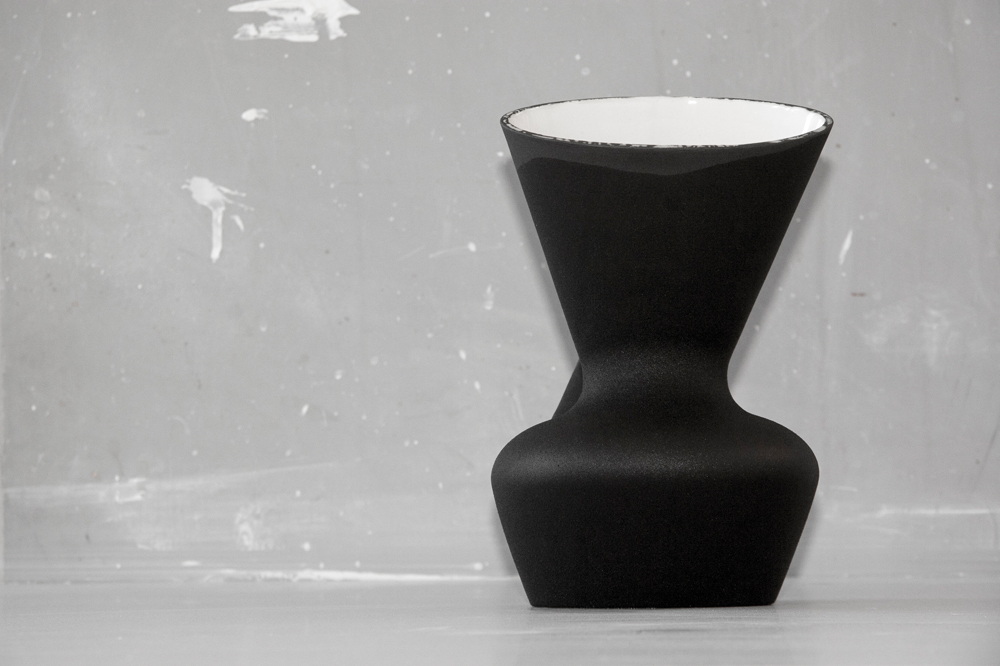
Nefertiti is a reinterpretation of the traditional Spanish porrón, used to serve and drink wine.
READ MORE
Nefertiti is made of porcelain, glazed on the inside and with a metallic finish on the outside. It has a rough texture on the surface for a better grip with the hands.
Both, the first crops of grapes (Vitis vinifera) and the first archaeological evidence of crushed grapes for the extraction of wine, occurred in the Bronze Age in places close to Ancient Egypt, 3000 years before Christ. This activity was associated with the most noble and elite classes: for kings at parties, religious ceremonies and funerary rituals.
The way the piece is crafted reminds one the bust of Nefertiti Neferu Atón, a queen of the XVIII dynasty of Egypt and The Great Royal Wife of Akhenaten. The Nefertiti porrón reinforces the importance of the wine culture in the lower Nile civilizations and also represents the elegance and pleasure of drinking wine.
—
This piece was exhibited in the Helsinki design week 2016.
Utilizamos cookies para proporcionarte la mejor experiencia de usuario. Si sigues navegando estás dando tu consentimiento para la aceptación de las cookies y nuestra política de cookies, pinche el enlace para mayor información.
ACEPTAR
We use cookies to enhance your experience while using our website. If you are using our Services via a browser you can restrict, block or remove cookies through your web browser settings. We also use content and scripts from third parties that may use tracking technologies. You can selectively provide your consent below to allow such third party embeds. For complete information about the cookies we use, data we collect and how we process them, please check our Privacy Policy



Recent Comments